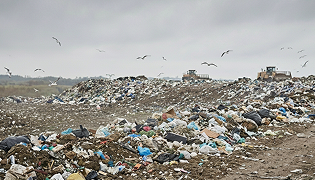
A peer-reviewed study published in 2024 has found that methane emissions from U.S. landfills are approximately 40% higher than official EPA estimates suggest. The research, which used satellite data and ground-based atmospheric measurements, identified significant discrepancies between reported emissions — based on standard modeling approaches — and actual emissions detected in the atmosphere above and downwind of landfill sites.The findings have significant implications for climate accounting, regulatory policy, and the urgency of landfill diversion. Landfill methane is already recognized as the third-largest human-caused source of methane emissions in the United States. If actual emissions are 40% higher than reported, landfills represent an even larger share of the national methane budget than previously understood.Methane is a particularly potent greenhouse gas, with roughly 80 times the warming power of CO2 over a 20-year period. The study authors argue that the findings highlight the need for more accurate measurement methodologies, stronger regulatory requirements for methane capture at landfills, and accelerated investment in organic waste diversion.The discrepancy is attributed in part to the fact that standard EPA calculation methodologies rely on default emission factors that may not accurately reflect the conditions at specific landfill sites, particularly those with aging or poorly maintained gas collection systems.
Circular Economy
Municipalities Adopting Organic Waste Recycling to Extend Life of Existing Landfills
Feb 09, 2026
Read More